

Improve Air Quality with Home Ventilation
Like lungs, homes need to breathe and its air supply should be regularly circulated. Home ventilation systems work to replace the stale air within your home with a supply of fresh air from outside, creating a healthier indoor environment. Without this kind of ventilation, the air in your home is likely to become damp and unpleasant, leading to increased condensation and mould.
Home Ventilation Systems also prevent the build-up of airborne pollutants and can even reduce the spread of airborne viruses. Installing these systems within your home can help to increase indoor air quality and eliminate the cause of condensation.

Arrange a Free Site Survey
One of our friendly team will visit your premises to determine the best suited unit for your space
Positive Input Ventilation by Nuaire
Positive Input Ventilation (PIV) is a method created by market leaders, Nuaire, used to ventilate homes with a single system installed in the loft. It uses proven technology to draw in fresh air from outside which is then filtered to remove harmful pathogens before being fed into the home via a ceiling mounted diffuser. As the fresh air circulates, it pressurises the home which in turn, expels excess moisture along with allergens and other pollutants.
Positive Input Ventilation systems are quick, easy to install, and cost effective, making them an ideal solution for your home.


Trusted Nuaire Installers in Bristol
Good air conditioning keeps your home or workplace at the right temperature. Good ventilation keeps the air itself fresh, dry and healthy. That’s why we install Nuaire, one of the UK’s most respected ventilation manufacturers, alongside our air conditioning systems.
Mechanical Ventilation with Heat Recovery
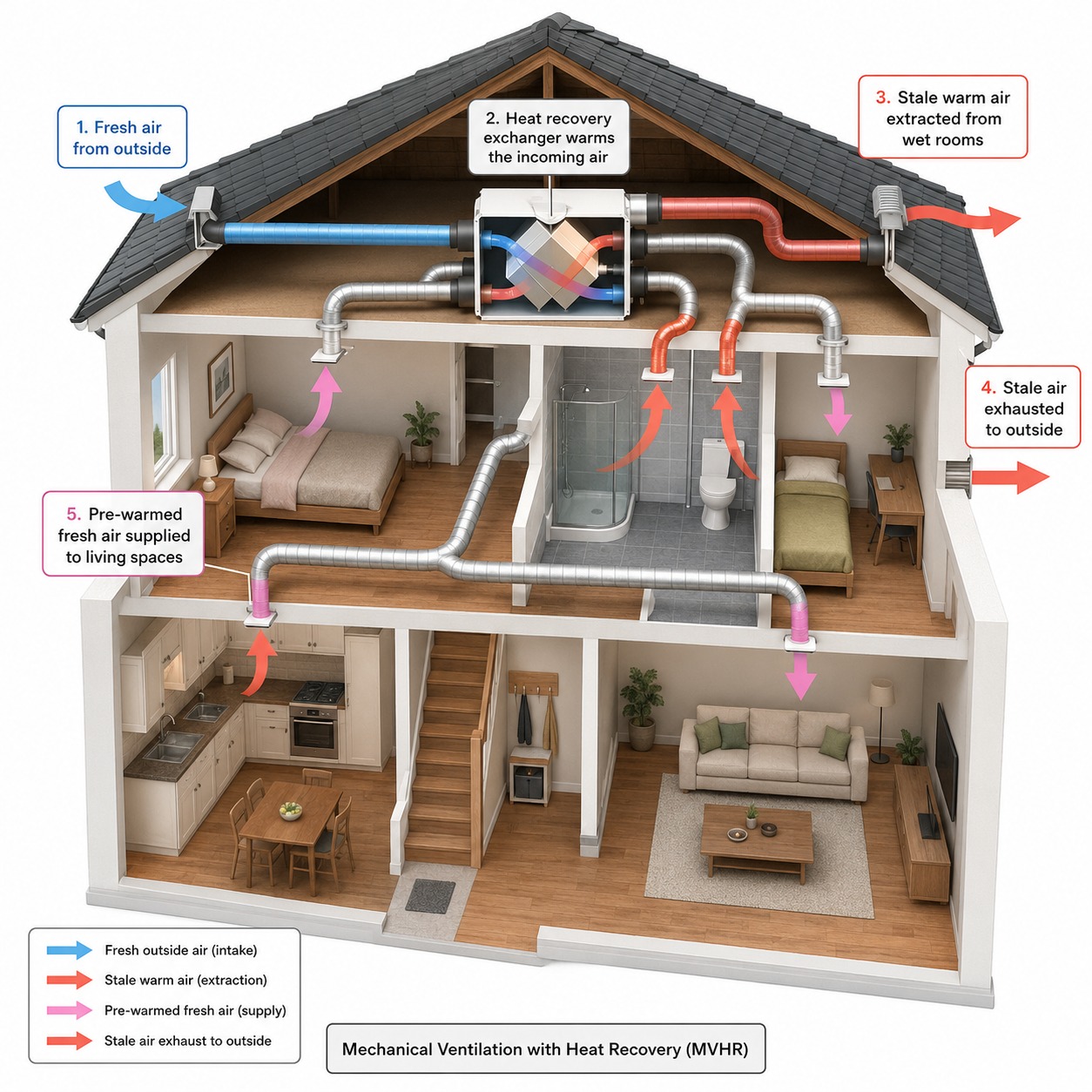
Mechanical Ventilation with Heat Recovery (MVHR) is a whole-home system that keeps a constant exchange of air flowing through your property. Stale, damp air is drawn out of rooms such as kitchens, bathrooms and utility rooms, while fresh air from outside is filtered and delivered to bedrooms and living areas. At the centre of the system is a Nuaire MRXBOX unit. Inside it, the warmth from the outgoing air is captured and passed to the incoming air, so your home is ventilated without the heat you’ve paid for being lost.
MVHR systems are a smart long-term investment for new builds, extensions and major renovations, creating a comfortable, energy efficient home from day one.
Benefits of Indoor Ventilation
Low Humidity Levels
Both PIV and MVHR systems keep moisture levels in your home under control. This stops condensation forming on windows and walls and prevents the damp conditions that mould needs to grow.
Health Benefits
Filtered fresh air helps reduce dust, pollen and other airborne pollutants in your home. This can make a real difference for anyone who suffers from allergies, asthma or other respiratory problems.
Lowers the Cost of Energy Bills
A dry home heats up more quickly than a damp one, so your heating doesn't have to work as hard. MVHR systems go a step further by reusing warmth from outgoing air to heat the fresh air coming in.
Protects Your Property
Excess moisture can damage paintwork, plaster, window frames and furnishings over time. Good ventilation helps protect your home from the costly effects of damp.
Fresh Air All Year Round
Enjoy a constant supply of fresh air without having to open windows. This keeps out cold draughts, outside noise and pollen, and means your home stays secure.
Quiet & Low Maintenance
Nuaire systems run quietly in the background, so most people soon forget they are there. Beyond a simple filter change from time to time, they need very little upkeep.
PIV vs MVHR: Which is Right for your Home?
| PIV | MVHR | |
|---|---|---|
| How it works | Pushes filtered fresh air into your home, moving stale air out | Swaps stale air for fresh, filtered air in every room |
| Where it's fitted | Single unit in the loft, or on a wall in flats | Central unit with ducts running to each room |
| Heat recovery | No | Yes, warmth is reused to heat incoming air |
| Installation | Quick, usually completed in a day | More involved, best planned into building work |
| Cost to install | Lower | Higher, with long-term energy savings |
| Best suited to | Existing homes, older properties and rentals | New builds, extensions and major renovations |
| Tackles condensation and mould | Yes | Yes |
Still not sure which system is best for you? One of our friendly team can visit your home, take a look at your property and recommend the right solution.
Our Home Ventilation Installation Process
1. Contact
After requesting a callback or contacting us, one of our friendly team will talk you through your options and recommend a unit based on your initial requirements.
2. Attendance
One of our engineers will visit your premises to assess the site and ensure it is suitable for the home ventilation unit.
3. Quote
At this point, we provide you with a free, no-obligation quotation.
4. Installation
Following acceptance of the quote, our installation team will attend your premises and install the home ventilation unit.
Our Testimonials
Kind words from our satisfied customers


FAQs
Yes. Home ventilation systems reduce humidity in your home which help to prevent the build up of condensation and mould.
PIV units make very little noise in operation and should not be heard due to their placement in the loft.
Yes. Home ventilation systems provide fresh air to the home which expels moisture and pollutants.
Yes, in many cases. MVHR is easiest to install during a new build or renovation, but it can be fitted in existing homes where there is space to run the ductwork. We’ll let you know what’s possible during your free site survey.
No. Nuaire MVHR units include a summer bypass, which lets fresh air into your home without warming it. This helps keep your home comfortable on hotter days.